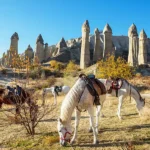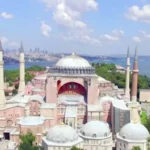
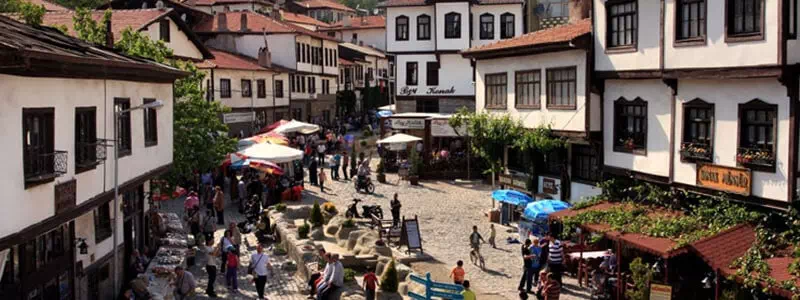
Cappadocia
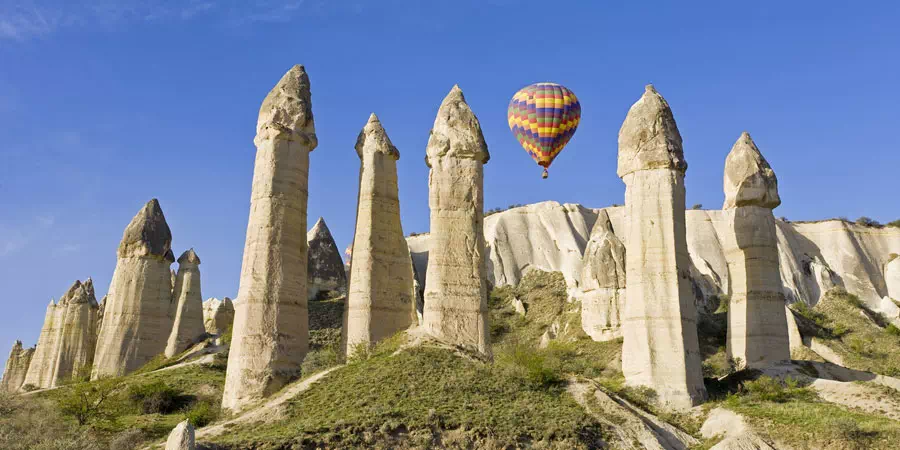
The region of cappadocia resembles another planet, One that is transformed from one color to another every season of the year every hour of the day.
Basalt rock, covered in tuff by spewing volcanoes thousands of year ago, and mystical fairy chimneys make one wonder where exactly one is.
It is impossible to be unaffected by the enchanting mystery of this incomparable natural wonder.
In this site you will find detailed information that has been prepared for your travels to what is perhaps Turkey’s most mystical region.
Ankara
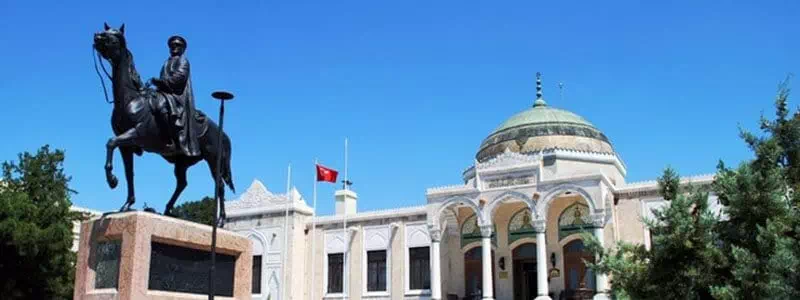
Ankara is the capital of Turkey and the country’s second largest city after Istanbul and it lies in the heart of Anatolia, an historical treasure at an altitude of 850 meters (~2800 ft).
Ankara, formerly named “Ancyra” by the Celts (meaning “anchor”), was an important cultural, trading and arts center in Roman times, and an important trading center on the caravan route to the east in Ottoman times. By consequence of being chosen as the base during the War of Liberation by Mustafa Kemal Atatürk, the city was declared the capital of the Republic of Turkey in 1923.
Ankara is a modern city with a population of over 5 million, maintaining the traces of civilizations dating back to the Bronze Age, to the Hittites, Phrygians, Lydians and Persians. The Romans and the Byzantines have also left their marks in the region.
On an imposing hill in the center of Ankara, stands the mausoleum (Anitkabir) of Kemal Atatürk, a fusion of ancient and modern architectural ideas. The Museum of Anatolian Civilizations houses a unique collection of treasures dating back to 2000 B.C.
Besides the historical monuments within the heart of the city such as the Roman Theater, Ankara Citadel, Temple of Augustus, Roman Bath and the Column of Julian, the city’s environs are also rich with ancient ruins. Ankara is surrounded by Hittite, Phrygian, Ottoman, Byzantine and Roman historical sites. The capital of the Seljuk Turks, Konya, renowned for the mystic “Whirling Dervishes”, lies to the south east of Ankara.
Ankara is a center for opera, ballet, jazz and modern dance as well as the home of the Turkish Parliament, ministries, foreign embassies and nine universities.
Shopping in Ankara can be exciting in the old part of the town for buying old copper, jewelry, carpets and kilims, antiques and embroidery. Modern shopping malls are scattered in and around the city selling various new items. Small shopping areas, local markets and restaurants are other attractive sights one should not miss.
Ankara’s location makes it very convenient for “Weekend Escapes” to reach to skiing resorts, cultural and historical sites, and the seaside. Istanbul is only five hours away by bus.
Safranbolu
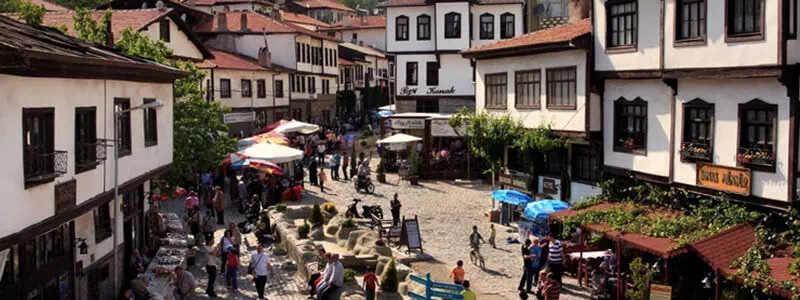
The City of Safranbolu is a typical Ottoman city, with typical buildings and streets, and played a key role in the caravan trade over many centuries. The settlement developed as a trading centre after the Turkish conquest in the 11th century, and by the 13th century, it had become an important caravan station. Its layout demonstrates the organic growth of the town in response to economic expansion, and its buildings are representative of its evolving socio-economic structure up to the disappearance of the traditional caravan routes and beyond.
Safranbolu consists of three distinct historic districts; the market place area of the inner city, known as Çukur, the area of Kıranköy, and Bağlar (the Vineyards). Çukur lies in the lower part of the town and has a triangular shape defined by two rivers. Its centre is the market place, surrounded by the houses and workshops of craftsmen. The segregation of the city centre is very typical for Anatolian cities. Kıranköy was formerly a non-Muslim district, with a socio-architectural pattern similar to that in contemporary European towns, with the artisans and tradesmen living above their shops. The houses in this district are built of stone, in contrast to the wooden houses in Çukur, which illustrates how the separation of Muslim and non-Muslim quarters during the Ottoman Period enabled each community to establish settlements according to their own traditions.
The pattern of settlement in Bağlar (the Vineyards) consists of single houses set within large gardens. This district on the northwest slope of the city, looking to the south, was the summer resort for the city.
The streets in Çukur and Kıranköy are narrow and curved, creating a wider view at the corners following topographic lines, and the various consoles of the houses contribute to creating interesting street perspectives. The streets feature stone paving, sloping inwards to evacuate surface water, and older houses are half-timbered, while the spaces between the timbers are filled with various building materials. There are no windows on the street frontage, so that stone walls resemble extensions of garden walls. The main rooms on the first floors are usually panelled with built-in cupboards, fireplaces, shelves and benches. Many of the ceilings are lavishly carved and painted. The rooms serve different purposes and are connected together with halls called “sofa”, which are very important elements of the house.
Mount Ararat
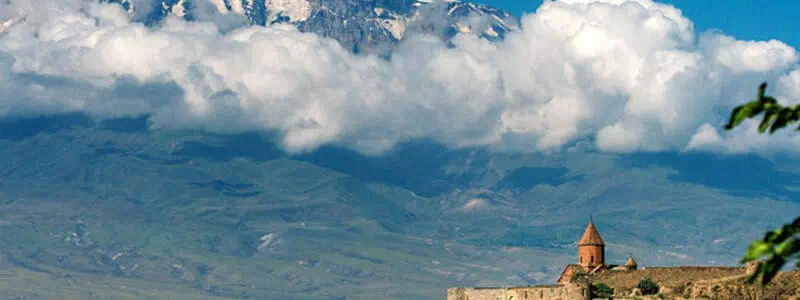
Mount Ararat, Turkish Ağrı Dağı , volcanic massif in extreme eastern Turkey overlooking the point at which the frontiers of Turkey, Iran, and Armenia converge. Its northern and eastern slopes rise from the broad alluvial plain of the Aras River, about 3,300 feet (1,000 metres) above sea level; its southwestern slopes rise from a plain about 5,000 feet (1,500 metres) above sea level; and on the west a low pass separates it from a long range of other volcanic ridges extending westward toward the eastern Taurus ranges. The Ararat Massif is about 25 miles (40 km) in diameter.
Gaziantep
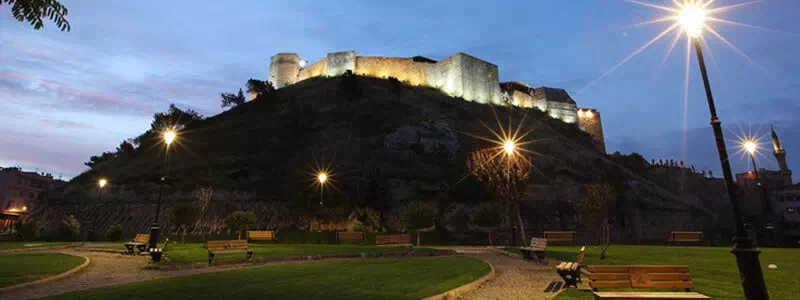
Gaziantep has been the home of various civilizations throughout the history because of its geographical location. The city is between Mesopotamia and Mediterrenean lands, it has been housed since the pre-historic ages, the historical silk road passes through the city, it is at the intersection point of the roads. All these reasons have made the city popular in commercial, cultural and artistic fields so far.
The Indepence War and Gaziantep Defense have a very important place in its history. 6317 people in Gaziantep died while serving in the defense of Gaziantep. And, that is why the city was given the title ‘Ghazi’. It has become the symbol of fighter spirit of the people in Gaziantep. Likewise, this fighter spirit has played a dominant role in every field of life, while transferring from generation to generation.
Akdamar Island
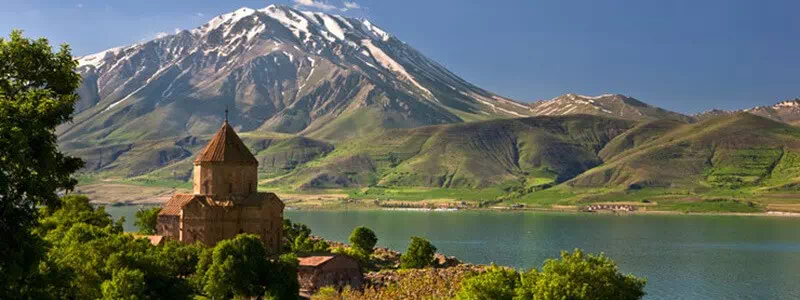
Akdamar Kilesi (Akdamar Church) or Church of the Holy Cross) is a ruined Armenian cathedral in Eastern Anatolia. Situated on a small island in the beautiful mountain setting of Lake Van, the Akdamar church dates from the 10th century and is famed for the fascinating reliefs carved on the exterior.
History of the Cathedral of the Holy Cross
The Church of the Holy Cross was once an important Armenian cathedral. The seat of the Armenian Orthodox patriarch, the cathedral was founded by King Gagik between 915 and 921 as part of a royal complex that included a palace, monastery, streets, gardens and terraced parks. The church is all that remains today.
The church was designed by the Armenian architect Trdat Mendet (also known as Manuel), who also built the cathedral in nearby Ani and helped repair Hagia Sophia’s dome when it collapsed after an earthquake.
The Church of the Holy Cross was the seat of an Armenian patriarch from 1116 to 1895, after which it was abandoned due to conflict between Armenia and the Ottoman Empire. The building fell into disrepair and was neglected throughout the 20th century.
The cathedral was restored by the Turkish government beginning in May 2005. The restoration cost $1.5 million and took 18 months to complete. At a ceremony on March 29, 2007, it was officially opened as a museum. The restoration project was seen as a diplomatic step by Turkey to improve relations with Armenia, which remain very tense.
Nemrut Mountain
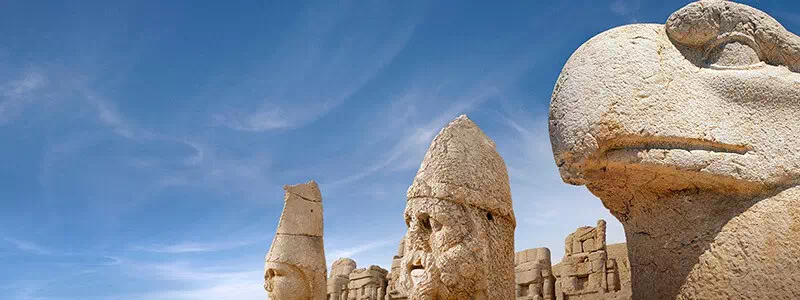
The mausoleum of Antiochus I (69–34 B.C.), who reigned over Commagene, a kingdom founded north of Syria and the Euphrates after the breakup of Alexander’s empire, is one of the most ambitious constructions of the Hellenistic period. The syncretism of its pantheon, and the lineage of its kings, which can be traced back through two sets of legends, Greek and Persian, is evidence of the dual origin of this kingdom’s culture.
Plan Your Visit with Acetes Travel
Reading about Things to do in Eastern Turkey? See how Acetes Travel can make it part of your Istanbul itinerary — book direct, free cancellation, 24/7 WhatsApp support.
Explore the Bosphorus Sunset Cruise →